The Riksbank Prize in Economic Sciences in memory of Alfred Nobel went to Richard H. Thaler in 2017, “for his contributions to behavioural economics”. The sentence in itself is quite the contradiction – eyebrows would be raised at the idea of considering psychology to be a science, or as part of the economic profession. The Guardian would publish an article stating that Thaler was indeed a “controversial choice” for the prize, since “many in economics and finance still believe that the best way to describe human behaviour is to eschew psychology and instead model human behaviour as mathematical optimisation by separate and relentlessly selfish individuals, subject to budget constraints.”
“The foundation of political economy and, in general, of every social science, is evidently psychology. A day may come when we shall be able to deduce the laws of social science from the principles of psychology” – Vilfredo Pareto, 1906
Behavioural economists account for roughly 6% of all Nobel prizewinners in Economic Sciences. Resistance to new ideas is inevitable, but increasingly, individuals in the field, as well as governments, with a greater access to data than ever before through the internet and faster information exchange, would be able to tell more quickly if a policy has worked or flopped. And increasingly, patterns would emerge – large subsidies, taxes, incentives or policy changes seemed to have a minimal impact on achieving desired changes in behaviour. For instance, in the UK, to ensure that people would pay their car tax, the government introduced a new policy in which they took data from traffic cameras, and cross-checked license plates against car tax records. They would identify non-payers, and through this system, send letters to these non-payers, reminding them to pay their car tax. In the end, a policy that received heavy investment lead to minimal returns as many non-payers failed to pay even when identified and written to.
Thus, such resistance began to fade as economists and governments began to realise that behavioural analyses can help to unpack what makes some policies work and why some others fail, that all policies and challenges have a behavioural component. In so doing, the doors opened to alternative and potentially much more effective approaches.
“Please do not confuse nudge with noodge […] the ‘Yiddishism noodge‘ is ‘a noun meaning ‘pest, annoying nag, persistent complainer’… To nudge is ‘to push mildly or poke gently in the ribs, especially with the elbow'” – Thaler & Sunstein (from Nudge, 2008)
In 2008, Thaler and partner-in-crime Cass Sunstein, himself a legal scholar, published “Nudge”, a hugely popular book that espoused the ideas of libertarian paternalism and choice architecture. In it, it started with the premise that, because people are Humans (as opposed to Econs, cold, rational decision-makers), they make predictable errors. It detailed how these errors can be anticipated, and through small policy ‘nudges’ that maintain the agent’s freedom to choose, the error rate can be reduced.

Thaler and Sunstein exploded onto the scene in 2008, but unbeknownst to them, the integration of behavioural approaches to economics and psychology into policy had been in the works since the turn of the millennium. Nudge was the impetus for the popular acceptance of behavioural economics and the (slightly more than a) nudge for governments to start properly integrating psychology into policy, but beginnings of concrete were already sprouting since 2002, in the form of the Prime Minister’s Strategy Unit (PMSU).

Originally called the Prime Minister’s Forward Strategy Unit (very strategically named), the PMSU was formed to strengthen the capability of Downing Street to “look ahead at the way policy would develop, the fresh challenges and new ideas to meet them”, according to Tony Blair, who had been re-elected in 2001 after a landslide victory. Halpern would be the chief analyst of this unit, having previously held a position as an academic at the Faculty of Social and Political Sciences at Cambridge. Initially, PMSU would, besides major policy reviews, be writing “think pieces” that questioned the implications of pushing for emphasis on particular disciplines or viewpoints in government. Having consulted Daniel Kahneman (at a point in time shortly before his winning of the Nobel Prize), papers were written exploring the implications of psychology and behavioural literature for policy. Many of these papers were written with respect to problems such as smoking, unhealthy diets, drinking, unsafe sex and motor accidents that had little budget set aside to be addressed, yet were key causes more than half of healthy years being lost in industrialised nations (according to the World Health Organisation).
The launch of these papers was met with resistance (what else did we expect?) – the idea that behavioural approaches were being used to “manipulate” undesirable behaviour was seen as too paternalistic. However, PMSU didn’t give up easily – with respect to pensions policy, PMSU sent a copy of their paper on defaults to Adair Turner, Vice-Chairman of Merrill Lynch Europe, who at the time was conducting an external review on the UK pension scheme. The paper, which Kahneman pointed out was an early piece on a form of paternalism called libertarian paternalism, suggested making pensions “opt-out” rather than “opt-in” programmes to make it easier for more individuals to get onto pension programmes. The suggestion was ultimately adopted by Turner, and was highly effective – the proportion of employees of large firms saving for pensions rose from 60%, where it had hovered for decades, to over 80%. This proved to be one of the earliest successes for behavioural insights in policy.
However, as the years went on, and leadership in the UK was to change hands from Blair to Gordon Brown, the Opposition would state clearly its desire in 2005 to shut down the PMSU with the view of slimming down the centre of government. Brown also indicated privately that he intended to strip down the PMSU (according to Halpern), especially with the near-collapse of the international financial system in 2008, which made spending tight. The PMSU was eventually shut down in November 2010, but by that point, reports of the usefulness of behavioural insights had not gone unnoticed – the Canadians, French and Australians had all started developing their own Strategy Units, and coincidentally, Thaler and Sunstein’s Nudge (and the theories it espoused) would start receiving international attention, especially from within the White House.
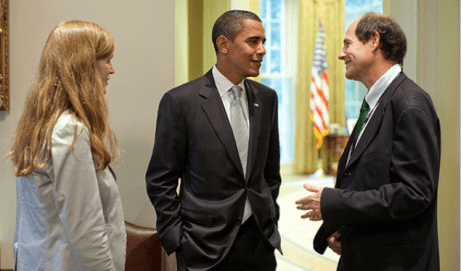
When Obama was elected into office as the 44th President of the United States, he would appoint Sunstein to be the Administrator of the Office of Information and Regulatory Affairs (OIRA) in 2009, having met him previously at the University of Chicago Law School. OIRA was originally set up in 1980, and was associated with helping to reduce paperwork and the burden on consumers and producers as a result of government regulation. Under Sunstein’s leadership, the focus of OIRA shifted towards reshaping regulations to have bigger impacts and lower burdens through behavioural economics and insight. Sunstein placed a focus on the reworking provision of information to the public, refashioning defaults, and becoming more transparent. For instance, he introduced regulation for car manufacturers to display a new “fuel economy and environment” sticker prominently on new cars, that expresses fuel economy in terms of “gallons/dollars per mile” rather than the traditional “miles per gallon (mpg)”. Why would this have an impact on consumer choice? Let’s take a look at an example from Kahneman and his book, Thinking, Fast and Slow:
Adam switches from a gas-guzzler of 12 mpg to a slightly less voracious guzzler that runs at 14 mpg.
The environmentally virtuous Beth switches from a 30 mpg car to one that runs at 40 mpg.
Who will save more gas by switching?
If the two car owners both drive 10,000 miles…
Adam will reduce his consumption from a scandalous 833 gallons to a still shocking 714 gallons, for a saving of 119 gallons.
Beth’s use of fuel will drop from 333 gallons to 250, saving only 83 gallons.
Adam, the gas-guzzler, saves more gas than Beth, someone who is environmentally conscious, and seeing the large increase in mpg, makes the switch.
“mpg” simply doesn’t scale linearly with every additional mile, and is thus misleading to consumers. Gallons/Dollars per mile, on the other hand, does scale linearly, and has allowed both consumers and policymakers to make more informed choices regarding fuel economy.
Sunstein’s leadership and ideas meant that OIRA had some real success. Throughout the Obama administration, behavioural thinking was embedded in the affordable care act, financial law reform, climate change policy and consumer protection policy. He, alongside ideas spread by Thaler in Nudge, opened up thinking across the world about more nuanced and behaviourally informed approaches to policy. Across the Atlantic, this was wonderful news for what was left of the unit that was PMSU.

Succeeding Brown in 2010 would be David Cameron, the first Conservative Prime Minister since 1997, and in his manifesto, he argued for “Big Society, not Big Government”. He challenged his opponents – “It’s time to say to Labour: it’s not about you, the government. It’s about we, the people”, believing that greater power and autonomy should be given to society and the individual in terms of making choices. However, he would temper this by saying “And it’s time to say to those who think it’s all about unchecked individualism: no, it’s not about me, the individual. It’s about we, the people”
“Libertarian paternalism is a relatively weak, soft, and nonintrusive type of paternalism because choices are not blocked, fenced off, or significantly burdened. If people want to smoke cigarettes, to eat a lot of candy, to choose an unsuitable health care plan, or to fail to save for retirement, libertarian paternalists will not force them to do otherwise – or even make things hard for them. […] Rather, they are self-consciously attempting to move people in directions that will make their lives better. They nudge.” – Thaler & Sunstein (from Nudge, 2008)
Cameron’s manifesto fell very much in line with the point of view Thaler and Sunstein were trying to forward – empowering and allowing for the decision-making of individual economic agents (rather than imposing legislation that forcibly regulates behaviour, such as through quotas, bans, licensing, etc.) while architecting cheap and easy ways to alter people’s behaviour such that they would make the socially desirable choice. Cameron would appoint Steve Hilton to be his director of strategy, and alongside Rohan Silva, then a bright young aid to the Shadow Chancellor George Osborne, Hilton would travel to the United States to learn from the Obama administration, as well as from Thaler and Sunstein themselves. Rohan would then pen an opinion piece in Osborne’s name regarding nudge-type approaches, highlighting how, for instance, home energy conservation could be encouraged by giving households feedback on their use relative to their more efficient neighbours, such as through glowing orbs on people’s roofs that signal the level of energy use to their owners and others. In the aftermath of the 2008 financial crisis, the Osborne-Hilton-Silva critique of existing policy presented fresh ideas that might be crazy enough to work, especially given their low cost of implementation. Cameron was elected into power in the May of 2010, and new, nudge-thinking was not so easily dismissed.

By July 2010, Cameron had launched the world’s first Nudge Unit, known in the UK as The Behavioural Insights Team (BIT). It was a team set up within the Cabinet Office, meant to work with government departments across Whitehall (the UK’s central government administration) to implement behaviourally-informed changes to policy. Headed by Halpern, comprised of civil servants from PMSU, and advised by both Thaler and Kahneman, the BIT started as a small team of seven people, and it had three objectives:
- Transform at least two major areas of policy.
- Spread understanding of behavioural approaches across Whitehall.
- Achieve at least a tenfold return on the cost of the unit.
Failure to achieve these objectives would lead to BIT being shut down on its second anniversary. A concrete plan had to be made for BIT to start proving itself, a framework or structure had to be in place for BIT to succeed.
In its first year, BIT started working on small changes, like changes in letters and communications. In wanting attempt larger-scale policy changes, they had to develop support for behaviourally-informed approaches, lest major government departments pay no attention to them. It was then that BIT developed the EAST framework, a mental heuristic to help government departments quickly identify where policy could benefit from a behaviourally-informed overhaul. This made behavioural economics more accessible and understandable to the civil service, allowing BIT to expand its reach far and wide within Whitehall.
So, what is EAST?
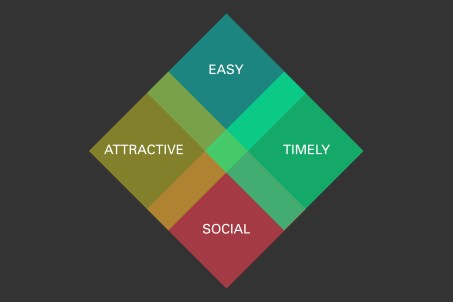
1. Easy.
The premise behind Easy is that people are much more likely to do something if it’s easy and low-hassle. Identifying the friction in a policy, which simply refers to the hassle an individual goes through as a result of the policy, and reducing said friction, makes it more likely for the policy to achieve desired outcomes. Reducing friction can be done by setting the right default, which refers to the path of least resistance, or the easiest path. Setting the default as the socially desirable option greatly simplifies the policy and allows for objectives to be more easily achieved.
For instance, with regards to 401k retirement plans in the United States. Worryingly, despite $100 billion in subsides going into pensions in the USA, it seemed as though people preferred not to save – only 42% of working Americans were enrolled in 401k plans in 2006. Originally, the default was that the 401k plan was opt-in, meaning that individuals were not automatically enrolled into the plan. They had to go through paperwork and spend their precious time signing up for the savings plan – this simply isn’t easy, nor is it the path of least resistance.
Thaler would suggest changing the default to be opt-out, meaning that individuals would be automatically enrolled into the programme, saving time and effort in having to sign up for a 401k. This greatly reduces friction for an individual in making the socially desirable choice (which, if it wasn’t clear, is saving for retirement rather than blowing all your cash now), and lead to 91% of working Americans being enrolled in 401k by 2015.
Changing the default clearly achieved socially desirable outcomes. However, is it what people really wanted? According to David Laibson, a Professor of Economics at Harvard, survey data showed that 9 out of 10 workers supported the changes in 401k defaults, and that of those who did choose to opt-out, 7 out of 10 thought opt-out was still preferable to an opt-in arrangement.
Easy.
2. Attractive
The premise behind Attractive is that people are drawn to that which catches their attention. Designing policy such that the socially desirable outcome catches the individual’s attention in a positive manner allows for socially desirable outcomes to be more frequently achieved.
There are two basic elements to attraction.
Firstly, grabbing attention. Your brain receives thousands of signals every second. In sorting your emails, of which there are thousands to respond to, there are promotions, advertisements, letters from friends, business emails, emails from your boss – for an individual to process all this information takes time, and it isn’t easy especially if all emails look the same, with the same font, similar subject titles… How does an individual prioritise some emails over others? Some emails may be marked by “URGENT” in bold letters, some emails may use different coloured font – all these are methods through which an individual’s attention may be grabbed. Supermarkets arrange fruits and vegetables in contrasting blocks of opposing colours, such as reds against greens, in a bookstore, the best-selling, most popular books are placed at your eye-level, or in clear view at the entrance, all to grab your attention. But hearing a baby cry for 12 hours on a 13 hour flight would also grab your attention, so how would policymakers use Attractive to their advantage?
The second element would be evoking positive reactions. Susan Fiske, the world’s leading expert on social cognition, has documented how people almost instantly categorise things and people into either positive or negative emotional reactions. By being able to evoke a positive reaction to something that has grabbed your attention, such as seeing brightly coloured oranges at the front of the store and choosing to purchase them because one finds them healthy and delicious, socially desirable outcomes can be achieved.
There are concrete methods through which Attractive can be achieved.
- Personalise: Using a recipient’s name rather than a broad salutation (for instance, in getting individuals to pay their speeding fines, the letter can start with the individual’s name, or have a picture of their car from their speed camera printed onto the letter)
- Salience: Making a key point stand out (for instance, in getting individuals to pay their tax on time, the words ‘pay now’ may be in bold or in a larger font)
- Messenger: Experts and named individuals beat anonymous or distrusted sources (naming a specific, reputable research institution rather than saying ‘studies show’ when advertising a product)
- Lotteries: Make incentives more attractive (in Sweden, those who drove within the speed limit were recorded and entered into a lottery, funded by the fines paid by those who sped)
- Emotion: Appealing to an individual’s feelings to sway them more easily (placing horrifying images of the ailments smokers suffer from on cigarette packs to make potential smokers fearful, thereby discouraging smoking)
All attractive options.
3. Social
The premise behind Social is that people are strongly influenced by what others are doing or have done. To influence a group of people who are not currently making socially desirable choices, they must be made aware of norms, which refers to what others (who are making socially desirable choices) are actually doing. This could be done through networks, in which communities spread good habits from person to person, such as through recommendations by friends or colleagues. It could also be done through reminders of others, such as advertisements or campaigns that spread statistics regarding norms and how often others participate in socially desirable activity. Finally, reciprocity can also make individuals aware of norms – in wanting to induce gift-giving behaviour, many charities offer a token gift, such as a pen or keychain, upon one’s donation. Seeing that one is being given something encourages one to reciprocate, and give back as well.
Researchers from Santa Clara University conducted studies on US university campuses using Social to encourage the use of stairs. They put up signs next to elevators that told people ‘most people use the stairs’, thereby making all potential elevator users aware of a norm. This saw stair use increasing by 46%. Furthermore, even when the sign was removed, a network effect had set in, and a higher level of stair use continued.
4. Timely
The premise behind Timely is that interventions are more effective before habits (established, socially undesirable behaviour) have formed, or during key moments when habits are disrupted. There are also time inconsistent preferences which can be exploited through Timely interventions.
For instance, with respect to expired visas, the Home Office in the UK would only intervene after the visa had expired, writing to the individual and asking them to leave the country only after expiry. This lead to low rates of departure by these visitors – intervening after expire only cemented the habit of ignoring the law. BIT decided to conduct a randomised control trial, writing to some individuals before their visa was set to expire. This raised the number of people recorded to have left the country by 20%, before the habit of ignoring the law had set in.
With regards to intervening during key moments, policy must be put in place to identify the key moments that disrupt certain habits. For instance, with regards to ensuring more adults go for skills or job retraining to keep up to date with the changing work landscape, the intervention could happen if adults with low or outdated skills have children. The individual would want to earn more money to support the child – intervening by providing brochures at the hospital or at the workplace regarding possible job retraining opportunities could be the Timely intervention needed to encourage more adults to attend retraining.
With regards to time inconsistent preferences, what is noticed is that what we choose for our future selves often greatly differs from what we choose for our present selves. Generally, what we choose for our present selves is more socially undesirable than what we choose for our future selves. A study by Read and van Leeuwen in 1998 found that found that as a reward for doing an amount of work, if asked to choose between chocolate and fruit, 74% of respondents chose fruit if they were told that the prize was to be delivered in a week, while 70% of respondents chose chocolate if they were told they would receive the prize instantly. Policymakers can offer services that allow people to shape choices for their future selves, thereby increasing the consistency of socially desirable behaviour. For instance, in the USA, many states and casinos now offer the option to gamblers to self-exclude themselves from gambling, allowing the individual to choose to constrain his future choices, knowing that his preferences may be time inconsistent.

Needless to say, BIT was a success, and today it is a limited company with a team of over 100 employees, and it has expanded to the United States, Canada, as well as Australia. The Western world has embraced the incorporation of behavioural economics into policy, all thanks to BIT and the frameworks it developed, EAST being the “mental heuristic of mental heuristics” in the words of Halpern. EAST might even be headed East, as governments in the Middle East and Asia start to adopt behaviourally-informed policies. Behavioural economics continues to establish itself as a relevant, significant part of Economics – the work of Thaler and many before him would precede him, and here’s to more advancements in the field as the world opens its eyes to the idiosyncrasies of human behaviour.

So, in the spirit of libertarian paternalism, I say, you do you Thaler, you do you.
 Discover Economics
You must be logged in to post a comment.