When I heard that Bastille would be coming to Singapore in the August of 2017, I was ecstatic, to say the least. The night ticket sales opened in March, I immediately snapped three up, excited to have a night of fun with my friends.
Fast-forward to a week before the date of the concert, and the weight of exam preparation finally dawned on me. Would it still be worth it to attend the concert? I rationalised to myself – I’ve already bought the tickets, so I might as well go, right?
“the rational model as a useful approximation, rather than as a precise description of human behavior” – Alvin E. Roth
We have previously examined Rational Choice Theory (RCT), the basis of Traditional Economics – its premises, strengths and shortcomings. It is from studying RCT’s shortcomings that we understood the concept of Bounded Rationality – that our ability to make optimal decisions is limited by the information we have, the time we have and our cognitive ability.
This is where Economics, as Bastille posits, wears its flaws upon its sleeve.
Behavioural Economics, a relatively recent development in the discipline, stemmed from the acknowledgement of Bounded Rationality. Traditional Economics only takes into account overall utility, and assumes that a person will choose what gives maximum utility. However, when risk is involved due to a lack of information or time, and with our limited cognitive ability, individuals will show a greater preference for certainty. People will use simple rules of thumb in making decisions – rules they have developed over time in the light of experience, and simple heuristics become an optimal way to respond to occasions where we lack information or time. Behavioural Economics studies how people’s buying, selling and other behaviour responds to various incentives and social situations. They reject the “simplistic” notion that people are always rational maximisers. The following section will examine some of the rules that the economic agent might follow in situations of risk in the real world – rules that contradict the rational assumption and are considered fallacious in Traditional Economics, but could have use in the Behavioural Economics paradigm.
Sunk Cost Fallacy (SCF)
To understand SCF, we must first understand the concept of sunk cost. In Traditional Economics, sunk cost is cost that is already incurred and cannot be recovered. It is independent of future changes in factor prices. For instance, heavy land-based machinery, or infrastructural installations are sunk costs, as they have already been purchased, and an increase or decrease in their usage does not change the price they have been purchased for.
Sunk costs in theory have no opportunity cost, as they are unavoidable, and thus, they should not be factored into cost considerations, especially since it is not a marginal cost, and RCT encourages us to think at the margin.
Thus, SCF occurs when sunk costs are factored into one’s decision-making process. Here are some verbal visualisations SCF:
- “I’ve already bought Bastille tickets, so I should go for the concert, otherwise I’d be wasting the money.”
- “I might as well keep eating because I already bought the food”
There are a few theories behind why SCF occurs:
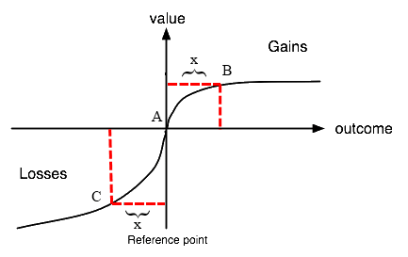
- Prospect Theory (see Loss Aversion): One would strongly prefer to avoid losses than to acquire gains, as the prospect of a loss looms over one’s mind much more heavily than the prospect of a gain (I would prefer not to lose the Bastille concert money rather than to gain time to study.)
- Self-Justification Theory: When cognitive dissonance occurs, in that there is an inconsistency between attitudes or behaviors, we tend to rationalise a bad decision to be a good one due to the sunk costs we have invested so as to eliminate the dissonance. (Making an investment into Bastille concert tickets beforehand would mean that, if my behaviour were consistent, I would go for the concert in the future, and thus rationalise the bad decision to spend time at a concert rather than to spend time studying due to sunk costs.)
- Commitment Bias: An emotional SCF, we escalate our commitment when faced with increasingly negative outcomes, and would prefer to continue rather than alter one’s course in alignment with previous decisions or actions. (Given that I spent 6 months getting emotionally prepared and excited for the concert, I would want to align my decisions with the continued escalation of commitment thus far, and go for the concert.)
In some cases though, SCF is actually the optimal decision making strategy. Given our limited capacity to remember the original reasoning behind our decisions, taking note of sunk costs serves as a mental placeholder that reminds us of why we decided on something in the first place. It has potential usefulness in that in can inform us given our limited cognitive ability and time, and thus, though fallacious in Traditional Economics, is useful in the real world.
Saliency Bias (SB)
This is when preferences, ideally context-independent, are now affected by context. Salience is the quality of being particularly noticeable or important, relative to the surrounding environment. Thus, SB is the tendency to make choices and have preferences based off of focusing on the most noticeable factors relative to the environment.
Saliency is closely linked to the Availability Heuristic, a mental shortcut that relies on immediate examples that come to a given person’s mind when evaluating a specific topic, concept, method or decision. People will make judgements about the likelihood and severity of an event depending on the availability of concrete, emotionally impactful information about it and the ease of remembering such information. This helps humans process complex risks by asking oneself how readily examples come to mind, aiding our limited cognitive ability, information and time.
Thus, economic agents would be more biased towards salient factors when making decisions. For instance, we decide to take a nice warm shower after a long day of school, due to the salient sensation of a pleasant, cleansing warm shower, and do not consider the hidden costs of electricity and water. Or, we fear death by terrorist attack more than we fear death by car accident, as acts of terrorism are generally more dramatically and frequently reported than car accidents, and are thus more salient in our minds, even though in reality, more people die by car accidents – this statistic is simply not as widely or sensationally reported.
Understanding SB allows policymakers to better craft policy and “nudge” economic agents towards making certain decisions. By providing more real-time information with regards to, say, the electricity and water costs of warm showers, and having the media report these hidden costs more to make the losses more salient than the gains, consumers can be nudged towards consuming fewer warm showers.
Loss Aversion (LA)
Referring again to Prospect Theory, LA is the tendency for people to strongly prefer avoiding losses than acquiring gains, while in Traditional Economics, the preference would be equivalent. This is due to two effects:
- Endowment Effect: The tendency for people to place a higher value on something they own than on an identical thing that they do not own. (In a study conducted by Daniel Kahneman, Jack Knetsch & Richard Thaler, participants were given a mug and then offered the chance to sell it or trade it for an equally valued alternative (pens). They found that the amount participants required as compensation for the mug once their ownership of the mug had been established (“willingness to accept”) was approximately twice as high as the amount they were willing to pay to acquire the mug (“willingness to pay”).)
- Status Quo Bias: A bias that favours the retention of the status quo over other options (as originally planned, I would hold onto the idea of going for the Bastille concert than considering other options that do not retain the same plan)
Giving Behaviour
This is behaviour in which individuals give goods and services for no monetary value, good or service in return. In the Traditional paradigm, this would be fallacious as it would not maximise self-interest – in fact, it will do quite the opposite. However, the Behavioural paradigm will tell you that there are altruistic and non-altruistic reasons for giving.
- Altruistic Reasons (unselfish concern for others)
- For religious purposes
- Effective Altruism: a broad, evidence-based approach to giving that identifies charities/causes which are highly cost-effective, by considering all causes and actions acting in the way that brings about the greatest positive impact, based upon their values of the giver.
- Non-Altruistic Reasons (a.k.a Reciprocal Altruism – giving to expect something in return)
- Egoic Altruism: giving to feel good about ourselves, and to gain respect
- To end a dispute or conclude a bargain
- To show superiority over the receiver and make the receiver feel morally indebted.
Altruism exists on a spectrum, and there is no perfect altruism or perfect non-altruism. Nevertheless, in the Behavioural paradigm, all forms of altruism can result in extrinsic utility (material gains) as well as intrinsic utility (gains from the heart), and thus, the economic agent has reason to give.
irrational exuberance.
Sunk Cost Fallacy / Saliency Bias / Loss Aversion / Giving Behaviour. These are the four behaviours and rules identified in Behavioural Economics to explain the deviation from rational behaviour in Traditional Economics, out of many possible irrational exuberances that stem from our limited cognitive ability, time and information. Such behaviour certainly influences the decision-making process of economic agents, but are we solely to blame for our irrational behaviour?
Let us now look at information in the real world, to better understand how limited information is presented and processed in theory, and how this could affect our decision-making.
“The more the issue is thus narrowed, the more exactly can it be handled: but also the less closely does it correspond to real life” – Alfred Marshall
To study a trend or a pattern in isolation of other trends and patterns is the mechanism through which much of Traditional Economics functions. By limiting the variables that have to be measured, we can have a controlled environment in which to study an issue or a relationship. This condition is known as the ceteris paribus, which means “all else unchanged”. The ceteris paribus assumption has great use in the Traditional paradigm. For instance, in tracking how the quantity demanded for Bastille tickets varies with price, ceteris paribus allows us to exclude the effects of other possible variables, such as inflation, changes in the price elasticity of demand for the tickets, etcetera, so that we can better study a single trend. By gaining more complete information through the exact study of one issue, we can move onto more realistic, inexact discussions at a later stage.
However, ceteris paribus is certainly prone to mis-use. The over-simplification of the real world, where other factors are not equal and where they change continuously and simultaneously, means that we would be ignoring changes in behaviour and relationships over time or due to policy changes. Robert Lucas and Charles Goodhart have researched extensively into attempts to change policy and their unexpected macroeconomic effects when ceteris paribus does not hold true in the real world. Lucas, in particular, is famously known for the Lucas’ Critique on the Phillips Curve, which illustrates the inverse relationship between inflation and unemployment.
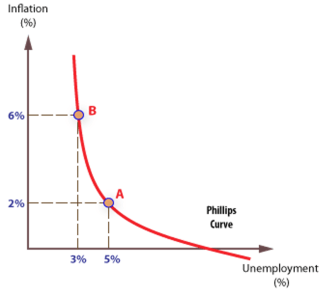
He argued that an econometric model like the Phillips Curve was built based on parameters that were not policy-invariant, and assumed, ceteris paribus, that the optimal decision rules of economic agents would not change. In the real world, optimal decision rules vary systematically with changes in policy – once economic agents figure out that the Central Bank is trying to increase the value of its currency in hopes of reducing unemployment, the inverse relationship is no longer exploitable as individuals will take into account the change in policy in their decision-making. Thus, ceteris paribus may render policy conclusions based on those models to be potentially be misleading.
Flaws being discovered in Traditional models (like the Phillips Curve) over time have lead to the acknowledgement of logical fallacies in the presentation and processing of information. The following are some logical fallacies discovered during the development of Traditional and Behavioural Economics:
- Fallacy of Composition: This arises when one infers that something is true of the whole from the fact that it is true of some part of the whole. For instance, Keynes’ Paradox of Thrift (the theory that during an economic recession, a fall in aggregate demand and hence in economic growth is, paradoxically, compounded by individuals trying to save more during the recession) exemplifies this fallacy. Leading into the Great Depression, policymakers generally averred individual thrift to be good for the economy. Thus, in encouraging individual thrift, they figured that collective thrift would also be good for the economy. However, as posited by Keynes, the increase in autonomous saving lead to a decrease in aggregate demand and thus a decrease in gross output which lead to lower total saving. Hence, the Paradox of Thrift holds that collective thrift may be bad for the economy, illustrating the Fallacy of Composition.
- Post Hoc, Ergo Propter Hoc (Post-Hoc Fallacy): Translating to “after this, therefore, because of this”, Post-Hoc Fallacy is the leap in logic that since (A) followed (B), (A) must have been caused by (B), i.e. the mistake of treating a correlation as conclusive evidence of a direct causal connection. For instance, as with the Phillips Curve, concluding that unemployment fell due to rise in the value of currency, when unemployment fell after a period of inflation, is a conclusion that was come to due to the Post-Hoc Fallacy. This fallacy is perpetuated partly due to the established heuristic guide in the scientific method that is Occam’s Razor, which states that among competing hypotheses, the one with the fewest assumptions (i.e. the simpler explanation) should be selected.
- Conjunction Fallacy: This occurs when a conjunction of 2 events is judged to be more probable than either events in a direct comparison – i.e. the false assumption that specific conditions are more probable than general ones. If the premise is that (A) is a subset of (B), then the Conjunction Fallacy leads to a conclusion that (A) is more probable than (B). For instance, Daniel Kahneman gives an example where some Americans were offered a choice of insurance against their own death in a terrorist attack while on a trip to Europe, or insurance that would cover death of any kind on the same trip. People were willing to pay more for the former insurance, even though ‘death of any kind’ includes ‘death in a terrorist attack’. He concluded that the Conjunction Fallacy arises when the conjunction (death from terrorist attack) suggests a scenario that is more easily imagined than the conjunct (death of any kind) alone (think Saliency Bias!).
An awareness of misbehaviour (as opposed to being rational), the implausibility of the ceteris paribus assumption as well as the various logical fallacies allows us to embrace and workaround the flaws of Traditional Economics, thereby better informing the decision-making of various economic agents. However, even the very data we compare to make our decisions on might be flawed – we should always be wary of the statistical limitations of information.
We must firstly be wary of misleading comparisons – when we compared apples to oranges to better understand RCT, we managed to find indicators (sugar level, amount of fibre) that were consistent across the board and universally established. However, the danger is when consistent bases for comparison cannot be found. If the GDP per capita for one country is calculated in a different manner from the GDP per capita in another country, then we must be wary of using this statistic to compare economic growth, for instance.
We must secondly be wary of selection bias – this is the selection of individuals, groups or data for analysis in such a way that proper randomisation is not achieved, thereby ensuring that the sample obtained is not representative of the population intended to be analysed. For instance, if the measurement of average income per capita in a country uses only a small sample size, then the data might be skewed towards being higher or lower than the actual value.
Economics has come under criticism for being a dismal science. In the words of Donald Low, a Singaporean academic, it fails to recognise that the “assumptions of human agency in textbook economics do not always conform to reality”. However, the development of Behavioural Economics and the understanding of the assumptions, logical fallacies and statistical limitations of various economic models has meant that by wearing these flaws on its sleeve, the discipline has evolved to become more robust and dynamic than ever before. By acknowledging the idea of Bounded Rationality, and studying the effects of limited cognitive ability, time and information, all of Economics’ flaws have, as posited by Bastille, been “laid out one by one. We see that we need them to be who we are, without them we’ll be doomed.”


Let Behavioural Economics take off from where Traditional Economics began. These flaws must be surfaced for the discipline to flourish, and for us to have a more complete picture behind the intricacies of decision-making.
Now if you’ll excuse me, I have a concert to attend.
 Discover Economics
You must be logged in to post a comment.